
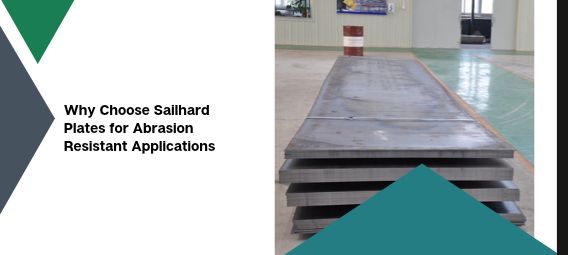
Abrasion wears down steel surfaces wherever equipment handles rock, ore, aggregate, or other hard material under heavy load and constant friction. Wear-resistant steel plates slow that material loss, which extends service life and cuts how often operators replace components. Sailhard plates suit applications that demand resistance to mechanical wear, provided the grade and thickness match the duty. That makes them a practical choice for mining, cement, and material-handling equipment that works under daily abrasive load.
What Are Sailhard Plates?
Sailhard plates are wear-resistant steel plates used as structural and lining material in industrial equipment that faces constant abrasion. They protect the base machinery by taking the repeated surface contact that would otherwise erode ordinary steel. Selection depends on four factors: hardness, toughness, thickness, and the operating conditions of the equipment. Sailhard plates provide a guaranteed minimum hardness of 200 BHN, offering a balanced combination of sliding abrasion resistance and moderate impact toughness. Exact properties differ by product grade, so buyers should verify specifications against the relevant technical datasheet before finalising a purchase or fabrication plan.
Key Properties of SAILHARD Wear Resistant Plates
Five characteristics define how Sailhard Wear Resistant Plates perform in demanding industrial environments.
- Abrasion resistance: Limits material loss caused by friction and contact with abrasive materials.
- Hardness: Supports surface wear resistance, with a guaranteed nominal hardness of 200 BHN.
- Strength and durability: Help components withstand heavy loads and demanding operating conditions.
- Fabrication requirements: Cutting, welding, forming, and machining must follow the plate manufacturer’s recommendations.
- Grade and thickness options: Selection depends on equipment design and service requirements.
Hardness values and mechanical properties vary by grade, so confirm them in the product certificate.
Why Choose Sailhard Abrasion Resistant Plates?
Sailhard Abrasion Resistant plates reduce wear by slowing surface deterioration in equipment that handles abrasive material. Longer component life follows, since correct material selection lowers how often plates need replacement. Maintenance demands fall as a result because less wear limits certain repair interventions. Correctly specified plates also support consistent equipment performance, and the range of grades and thicknesses lets designers match plates to equipment layout. Actual performance still depends on abrasion type, impact loading, material handling conditions, and maintenance practices, so results vary between sites.
Common Industrial Applications of Sail Hard Steel Plates
Sailhard steel plates are suitable for applications requiring light-to-medium abrasion resistance.
- Mining and mineral processing equipment
- Hoppers, chutes and transfer points
- Conveyor systems and transfer points
- Cement plants and aggregate handling equipment
- Earthmoving and material-handling machinery
- Industrial liners and wear plates
Each of these applications exposes steel surfaces to repeated contact with hard or abrasive materials. Crushers add heavy impact on top of sliding wear, which typically requires work-hardening Hadfield Manganese Steel rather than Sailhard.
Liners and wear plates absorb that contact so the structural steel behind them stays intact. Operators working on impact-heavy duty often review Hadfield Manganese Steel and Abrasion Resistant Steel options alongside Sailhard grades.
Factors to Consider When Selecting High Wear Resistance Sailhard Plates
Six criteria guide the selection of high wear resistance Sailhard plates for a given duty.
- Type of wear: Identify whether the equipment faces sliding abrasion, impact abrasion, or a combination of both.
- Hardness and toughness: Balance wear resistance against the need to withstand impact and avoid premature cracking.
- Plate thickness and dimensions: Match the plate to the equipment design and the expected wear allowance.
- Fabrication needs: Confirm suitable cutting, welding, and installation procedures with the plate manufacturer based on hot-rolled micro-alloyed steel guidelines.
- Operating environment: Where components face both structural loads and outdoor atmospheric exposure, weather-resistant structural steels like Corten steel may be used alongside Sailhard wear liners.
- Technical documentation: Verify the grade, test results, dimensions, and applicable specifications with the supplier.
Conclusion
Sailhard plates are a great choice for industrial equipment that suffers from heavy wear and tear. Results depend on choosing the correct grade, thickness, and fabrication method for actual service conditions, so buyers should check technical specifications before finalising any material. Sailhard plates are widely distributed by authorized steel stockists across industrial markets.