
Introduction
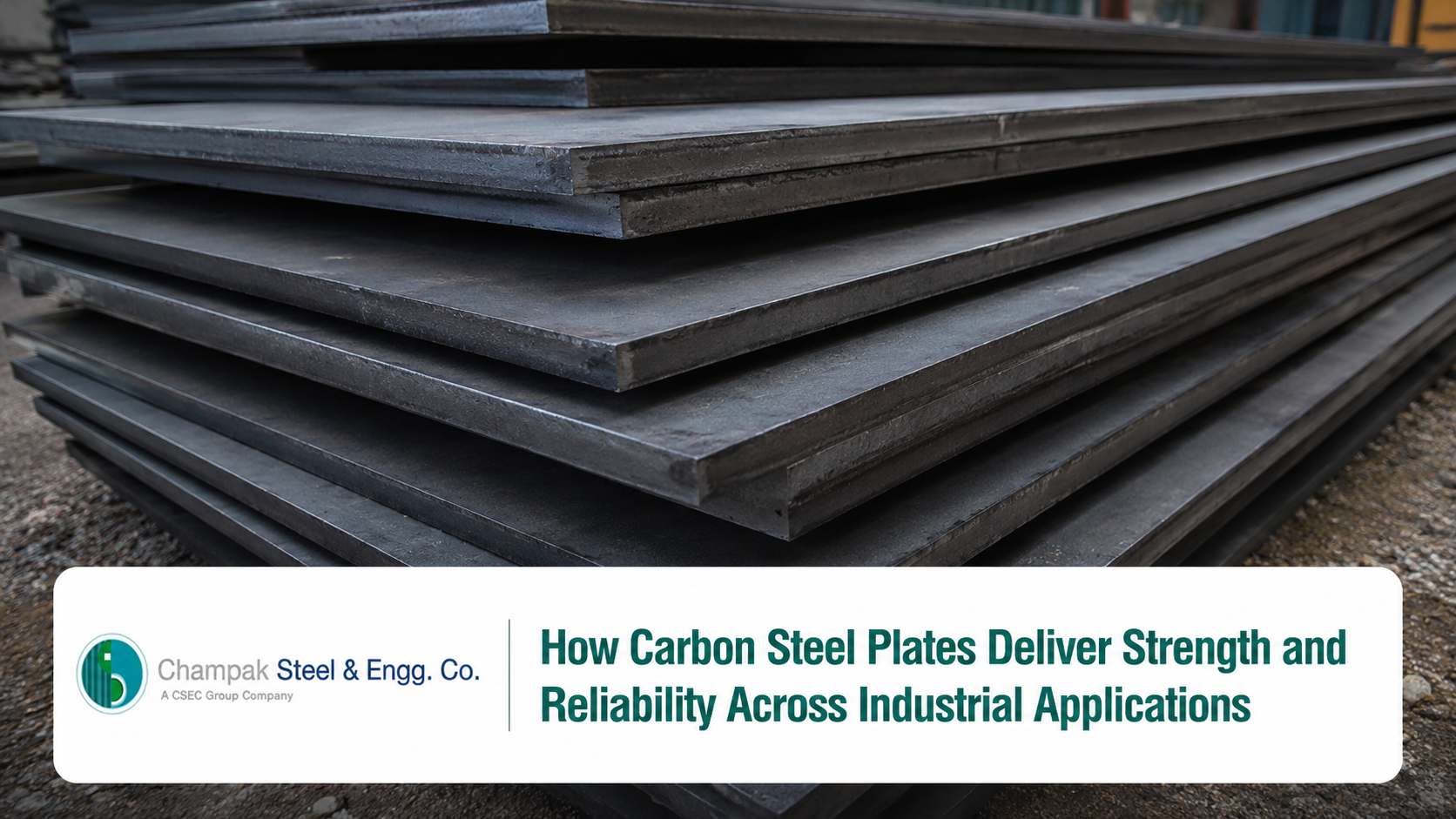
Carbon steel plates are used almost everywhere in industry, from bridges to storage tanks to machine frames. Anyone selecting material for a structural job usually weighs three things: strength, how long it lasts, and cost. That’s where carbon steel plates tend to win out. Demand has been rising steadily across infrastructure, manufacturing, energy, and heavy engineering. This article covers how carbon steel plates hold up under real working conditions, where carbon steel plate applications show up across sectors, and why heavy duty steel plates get specified for jobs where failure isn’t an option.
What Are Carbon Steel Plates?
Carbon steel plates are flat-rolled steel products, made mostly of iron with carbon added in, usually between 0.05% and 1.5% by weight. Carbon content changes the hardness, strength, and how easy the plate is to weld. Three broad categories exist. Low carbon plates, under 0.3% carbon, weld easily and form well. Medium carbon plates, between 0.3% and 0.6%, mix strength and ductility. High carbon plates, above 0.6%, are hardest but harder to weld. Plates come hot rolled or cold rolled, hot rolled for structural work, cold rolled where tighter tolerances matter. ASTM and ASME specifications set the rules for composition and testing.
How Carbon Steel Plates Deliver Strength and Reliability
Superior Load-Bearing Capacity
Carbon steel plates withstand heavy static and dynamic loads without bending out of shape. This is why they are used in structural beams, foundations and heavy equipment frames.
Durability Under Harsh Conditions
These plates cope with temperature changes, vibration, and knocks. Refineries, mills, and outdoor sites depend on that.
Resistance to Mechanical Wear
Friction and impact wear weaker steel very fast. Carbon steel plates maintain their surface finish even under constant stress, which decreases unplanned downtime.
Structural Stability
Large steel sections need to have the same mechanical properties from one end to the other. Uniform strength and hardness are retained through thick sections of carbon steel plates so there are no weak spots.
Long Service Life
A properly specified plate lasts years longer than lighter alternatives. Fewer replacements, less maintenance, lower cost over time.
Adaptability to Fabrication Processes
These plates cut, weld, bend and drill without needing anything unusual. That keeps fabrication moving on jobs with tight deadlines.
Major Industrial Applications of Carbon Steel Plates
Construction and Infrastructure
Structural steel plates go into beams, columns, bridges, and public infrastructure that needs to last for decades.
Oil and Gas Industry
Storage tanks, pipelines and process equipment use carbon steel plates to hold pressure and resist wear from constant fluid flow.
Power Generation
Boilers, pressure vessels and support structures in power plants use plates rated for high temperature and repeated pressure cycles.
Shipbuilding and Marine Engineering
Hull structures and offshore rigs need plates that can take fatigue from wave impact and saltwater over years of service.
Heavy Machinery Manufacturing
Equipment frames, machine bases and fabricated parts rely on engineering steel materials that hold their tolerances under repeated loading.
Mining and Material Handling
Structural parts and equipment in mining need plates that survive abrasion from ore, rock and general heavy handling.
Transportation Industry
Railcars, trailers and heavy transport equipment use carbon steel plates for chassis and body panels built to carry sustained cargo loads.
Common Grades of Carbon Steel Plates
ASTM A36 Plates
This is the standard for general structural work, with a minimum yield strength of 36,000 PSI.
ASTM A516 Plates
Used for pressure vessels, where toughness at low temperatures is the priority.
ASTM A283 Plates
Fine for moderate-strength jobs that need decent formability and weldability.
ASTM A572 Plates
Goes into high-strength structural projects, with yield strength up to 65,000 PSI.
API Grade Steel Plates
Specified for energy and pipeline work where performance under pressure and temperature cycling matters most.
Factors to Consider When Selecting Carbon Steel Plates
Start with load requirements, since that decides thickness and grade. Then think about the operating environment, whether it’s heat, cold, or abrasion. Corrosion exposure matters too, and might push you towards a coating or a different alloy. Fabrication needs affect weldability and machining. Standards and certifications confirm the plate is what it says it is. And budget has to line up with all of the above.
Quick Selection Checklist
- Plate grade
- Thickness
- Strength requirements
- Weldability
- Environmental conditions
- Compliance standards
Choosing a Reliable Carbon Steel Plate Supplier
A decent carbon steel plate supplier keeps a range of grades and sizes in stock so projects aren’t held up waiting on material. Mill test certificates and traceability ensure that a plate is what it claims to be. Buyers are saved from substandard steel by conformity to ASTM, ASME and other international standards. Quality testing and inspection should be done before plates leave the warehouse. When you’re not sure which grade is best suited for the job, we offer technical support. To keep your projects on schedule, we have steady stock with reliable delivery.
Conclusion
Carbon steel plates remain central to industrial and structural work because of their strength, toughness, and cost-effectiveness, and because they’re easy to fabricate. Construction, energy, transport, manufacturing and heavy engineering all lean on them for the same reason: they hold up under sustained load. Partner with a trusted carbon steel plate supplier to source high-quality plates that deliver dependable strength, durability, and long-term performance for your projects.